 Call Us
 Wechat

Our Service
With advanced scientific technologies, ECOLEET provides multidimensional services to improve your living environment.
Carpet Cleaning and Sanitizing
Carpet tiles come in many sizes, styles, and materials—ranging from solid colors to intricate patterns, and from woven textiles to fabric blends. They may be cherished family heirlooms or souvenirs brought back from a trip. Regardless of origin or value, carpets require careful, professional cleaning and maintenance.
From an indoor health perspective, carpet tiles function like a passive filter layer. They trap soil, dust, fine particles, pet hair, and other debris—including microorganisms, dust mites, mold, fungi, and allergens. Just as furnace and HVAC filters need regular cleaning, routine carpet maintenance and periodic deep cleaning are equally essential.
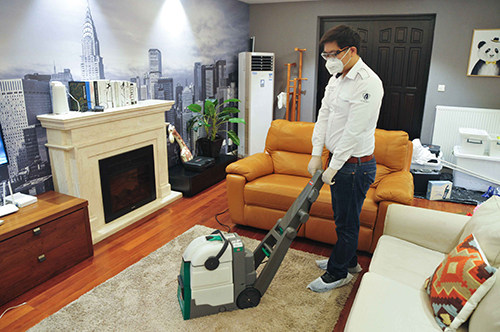
With our service, carpets regain their freshness and appearance, while their service life is extended. Deodorizing and sanitizing are performed as an integral part of the cleaning process, helping create a healthier living environment for you and your family.
Our service helps reduce allergen loads associated with elevated IgE responses, supporting a home environment less prone to asthma-like discomfort, cold and flu symptoms, seasonal pollen reactions, throat irritation, and itchy skin. This can also reduce reliance on allergy medications. Under proper protocols, the process is designed to minimize irritation risk for infants and allergy-sensitive individuals and to reduce unnecessary environmental impact.
We uphold a service commitment to reduce unnecessary use of toxic chemicals and to minimize environmental pollution. Our approach follows green cleaning principles—delivering thorough cleaning and sanitizing while reducing exposure to harsh chemicals.
We do not recommend attempting deep carpet cleaning with standard household vacuum cleaners or water-filter vacuums.
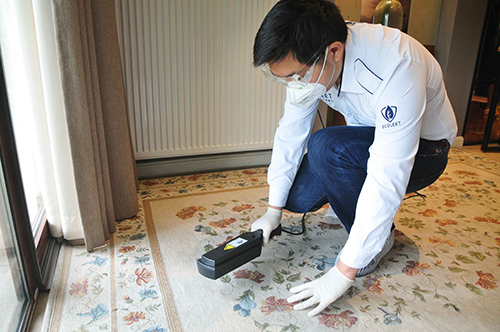
With the aid of a laser particle detector, ECOLEET has observed that some household vacuums and water-filter vacuums can perform poorly in filtering fine particles, including ultrafine particles below 0.3 μm. In such cases, allergens may be released back into the room as particles or water mist, increasing re-exposure and potentially extending the survival and spread window of microorganisms in the indoor environment. Because fine and ultrafine particles have a much larger surface area relative to their mass, they can carry a higher pollutant burden and present a greater health load. Some consumer testing has also indicated weaker performance for water-filter vacuums when filtering particles below 0.3 μm.
ECOLEET uses a professional, allergen-control filtration system that effectively captures and blocks particulate emissions, reducing particle release back into the indoor space. Under comparable test conditions—when overall particle counts in the environment are around 100,000–130,000 units—our filtration system can limit the exhausted ultrafine particles below 0.3 μm to approximately 20–50 units. In similar conditions, a water-filter vacuum may exhaust 50,000–150,000 units. The difference in filtration performance is clearly measurable and visible in instrument readings.
 We can help you
- Remove the dusts, human or pet hair and dander on the carpets.
- emove particulate matters and improve indoor air quality
- Remove the stains on the carpets such as coffee, wine, juice, tea, blood, urine, ink, yellow spots, paint, grease, shoe polish, lipstick and gums. (We may not be able to remove them 100%, but we can try our best to improve the situation.)
- Remove various allergens that elevate igE and relieve allergy symptoms.
- Kill the mites, fleas and insect eggs on the carpets and prevent mites from growing.
- Kill the bacteria, molds and some virus on the carpets and inhibit bacteria and molds growth.
- Remove various odors on the carpets, such as molds, vomit, pets, urine, sweat and other odors caused by bacteria and organics.
No need to worry about
- Chemical detergent causing an irreversible damage and shortening the life of carpets
- Unprofessional operations causing shrinkage, discoloration or textual damage
- Chemical residues that endanger health of human or pet, including possible allergy symptoms
- Secondary pollution caused by conventional detergent residues
- Unpleasantly pungent smell generated from chemical residues
- Molds, odors and slippery issues that may be caused by the moist left after cleaning
- Inefficient cleaning methods and lengthy operations

 上海工商
上海工商
 沪公网安备 31011702005051号