 Call Us
 Wechat


Our Service
With advanced scientific technologies, ECOLEET provides multidimensional services to improve your living environment.
HCHO and VOC Treatment
Formaldehyde (HCHO) and VOCs are among the most common—and most overlooked—indoor pollutants after renovation. ECOLEET provides an integrated testing, assessment, and remediation service. With a green material system and standardized procedures, we help bring indoor air indicators within national guideline ranges while minimizing unnecessary chemical exposure and residual odor.
Formaldehyde (HCHO)
Formaldehyde is a colorless, highly irritating volatile gas. It has been classified by the WHO and the IARC as a Group 1 carcinogen. Common indoor sources include renovation materials, engineered wood products, adhesives, coatings, and furniture. Emissions can persist for 3–15 years. Long-term exposure may contribute to abnormal olfactory responses, mucosal irritation, allergic reactions, impaired lung function, and immune dysregulation.
VOCs and TVOC
VOCs (Volatile Organic Compounds) refer to a broad category of organic chemicals that evaporate at room temperature, including benzene, toluene, xylene, styrene, aldehydes, and various solvents. TVOC represents the “total” VOC indicator measured under defined test conditions and is widely used to evaluate overall indoor air pollution levels. Elevated VOC/TVOC levels may cause short-term symptoms such as headaches, nausea, fatigue, and respiratory irritation. Prolonged exposure can increase health risks and reduce indoor comfort in both residential and commercial environments.
Standards and Control Targets
ECOLEET selects the applicable national standard framework based on the use case and site conditions.
Indoor Air Quality Evaluation (occupied spaces)
GB/T 18883-2022 “Indoor Air Quality Standard”
• Formaldehyde (HCHO): ≤ 0.08 mg/m³ (1-hour average)
• TVOC: ≤ 0.60 mg/m³ (8-hour average)
Project Acceptance and Use-Category Controls (new-build / post-renovation)
GB 50325-2020 “Standard for Indoor Environmental Pollution Control of Civil Building Engineering”
Category I buildings (residential, schools, elder care, etc.)
• Formaldehyde: ≤ 0.07 mg/m³
• TVOC: ≤ 0.45 mg/m³
Category II buildings (office and general commercial spaces)
• Formaldehyde: ≤ 0.08 mg/m³
• TVOC: ≤ 0.50 mg/m³
Note: For homes with seniors, children, or sensitive occupants, stricter targets are commonly applied. For commercial offices, targets are set based on usage profile and occupancy intensity.
ECOLEET Formaldehyde & VOC Remediation Service
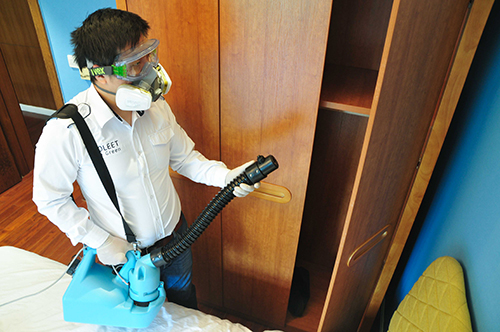
ECOLEET follows a closed-loop workflow: testing and assessment → source identification → space remediation → post-treatment verification. The goal is to reduce HCHO and TVOC to within nationally defined safe ranges. Our remediation approach uses naturally derived, low-odor, low-irritation materials and does not rely on strong fragrances to mask smells. Control of pollutants and odor sources is addressed simultaneously.
Proprietary Remediation Materials
Renovation Odor Neutralizer (Canada import)
• Original Canadian formulation
• Blend of 300+ natural plant extracts
• Rich in multiple bio-active organic components
• Designed to break down formaldehyde, VOCs, renovation odors, and microbial contamination
• Removal efficiency up to 90%+
• Certified under ISO 9001:2008 quality management; additional certifications include CSA and UL
• Non-irritating, non-corrosive, no secondary pollution
Formaldehyde & Renovation Odor Treatment (Australia import)
• Water-based, environmentally friendly product
• Designed to reduce airborne pollutants and odors released by paints, adhesives, and renovation materials
• Free of paradichlorobenzene (p-DCB)
• Does not rely on strong synthetic fragrances
• Designed to be compatible with people, pets, and the environment
Service Features
• Effective reduction of Formaldehyde / TVOC / renovation odors
• Fragrance-free
• Non-corrosive
• Low-odor, low irritation
• Low flammability
• Non-hazardous classification
• Low allergen potential
• Phosphate-free
• Controlled impact on people, pets, and the environment
 We can help you
- Reduce or remove VOC including HCHO, toluene, xylene and dapsone at home, in offices and new vehicles.
- Reduce or remove the concentration and intensity of VOC and HCHO odors.
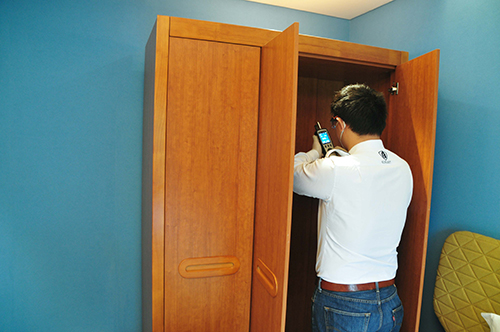
- Measure the effect of service through real-time monitoring devices.
No need to worry about
- Corrsion and discoloration of varnished furniture
- Changes of furniture appearance by chemical agents
- Furniture becoming damp or damaged through unprofessional operations
- Hazards to human health and environment by chemical residues, including allergy symptoms and discomfort
- Secondary pollution caused by chemical residues
- Delay in moving in due to prolonged operation period
- Areas difficult to clean due to no exposure to light
- Inapparent effects and short-term relapses due to lack of continuing effects

 上海工商
上海工商
 沪公网安备 31011702005051号