 Call Us
 Wechat


Our Service
With advanced scientific technologies, ECOLEET provides multidimensional services to improve your living environment.
Mold Remediation
If you manage a commercial facility—such as an office building, warehouse, records room, library, or museum—and would like to learn more about our commercial mold response and remediation services, please visit our Commercial Mold Remediation & Prevention page.
Water intrusion, persistent indoor dampness, poor ventilation, and neglected HVAC maintenance can all promote mold growth to varying degrees. Many people simply wipe away visible brown or black staining with water—or leave it untreated—allowing it to spread. This can significantly increase health exposure risks.
Mold remediation matters not only for appearance, but also for the safety of you, your family, and even pets. Mold and its spores can trigger or worsen allergies and respiratory issues, including asthma-like symptoms, respiratory infections, and rhinitis, as well as irritation or allergic reactions affecting the eyes, ears, and nasal passages. In more severe cases—especially for sensitive individuals or under sustained exposure—respiratory symptoms may deteriorate further.
Mold is a type of fungus that thrives on damp and/or decaying organic materials. It can be difficult to eliminate because even when conditions become dry, mold can form powder-like spores that travel through the air until they find suitable conditions to grow again. Mold often appears velvety in texture and is commonly black (or very dark), but it can also appear in other colors, especially white and green. It tends to develop in poorly ventilated, humid areas such as basements and attics, and it can adhere to a wide range of surfaces including paper, leather, wood, concrete, and tile.
If mold is affecting your living environment, prompt remediation is critical to prevent further spread and recurrence.
ECOLEET’s mold remediation and prevention service follows a structured approach focused on spore control, dehumidification and structural drying, deep sanitization, and growth suppression. We use an imported HEPA fresh-air filtration system that meets AHAM (Association of Home Appliance Manufacturers) air-quality standards and can block 99.97% of 0.3 μm particles. This allows effective removal of airborne mold spores (typically 2–10 μm) while improving overall air cleanliness. The filtration stage is paired with a dehumidification system equipped with ACT (Advanced Crossflow Technology) to reduce indoor humidity levels and support structural drying. Precision controls allow targeted drying in a wide range of environments, with humidity control capable of reaching as low as 8% RH.
For sanitization, we apply a 100% naturally derived disinfectant that is registered with the U.S. EPA (United States Environmental Protection Agency), treating the affected area comprehensively. The formulation is designed to penetrate and act within mold cells rather than remaining limited to surface contact. After sanitization, we provide an Australian TTO (tea tree oil) air purification service—sourced from Melaleuca alternifolia, a small tree native to New South Wales. The TTO is atomized into ultrafine micro-molecules and dispersed into the air to help suppress bacteria, fungi, and mold spores, reducing the likelihood of regrowth on walls and object surfaces.
High-risk locations should be checked regularly, including attics, basements, closets, drawers, ceilings, corners, and HVAC components. If you notice visible mold, dampness, or persistent odor, professional assessment and remediation should be arranged as soon as possible.
New! ECOLEET now offers post-water-damage restoration and emergency response services. If you experience burst pipes, flooding, or water leaks that lead to mold, odor, or microbial growth, we can provide remediation using restoration processes and methods certified by the RSA (Restoration Sciences Academy).
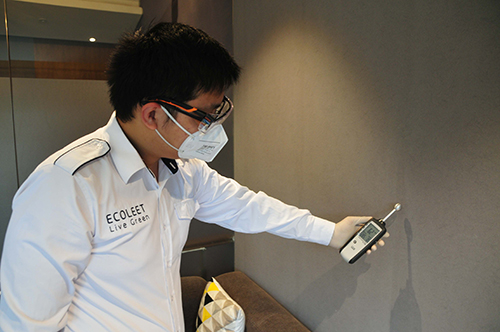
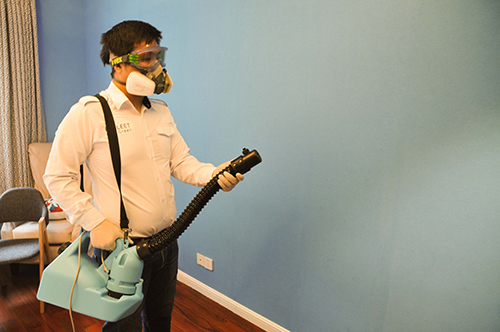
 We can help you
- Kill molds and their spores, remove mold spots and the stains they cause.
- Prevent molds and bacteria and provide a protection for up to 12 months.
- Remove mold odors and mephitic smells cause by other bacteria or organics.
- Inhibit germs and bacteria growth, improve indoor air quality and protect human health.
- Purify indoor air and reduce infectious diseases and allergy symptoms.
- Provide post-service solution and professional refitting plans of house structures to prevent molds growth again.
No need to worry about
- Traditional chemical detergents harming human health
- Possible corrosion and damages to the surfaces
- Pungent smells that are difficult to eliminate
- Huge cost for painting and the risk of molds growing again

 上海工商
上海工商
 沪公网安备 31011702005051号